

Wine Bottle Display Stands: Styles & Buying Tips
How to Choose a Wine Bottle Display Stand
Most people tuck their wine into the back of a cupboard and forget about it until they need it. That works fine for a case of everyday red, but it's the wrong approach for bottles you actually care about. A display stand keeps those bottles front and centre, which means you reach for them more often, notice them more, and think more carefully about which ones to open.
There's a practical case too. Storing wine horizontally or at a slight angle keeps the cork in contact with the wine, which stops it from drying out and letting air in. Any quality display stand handles this automatically. The question is just which style fits your space.
Why the Style You Pick Actually Matters
A display stand that looks great in a warm, timber-heavy kitchen will feel out of place in a sleek white apartment. Getting the style right isn't purely a personal preference question. It's about whether the stand disappears into the background or becomes a deliberate part of the room.
The main variables are straightforward: how many bottles you want to display, where you're putting it, and what your space already looks like. Once those three things are clear, the decision gets much easier.
The Four Main Styles, and When Each One Works
Gravity (Balanced) Holders
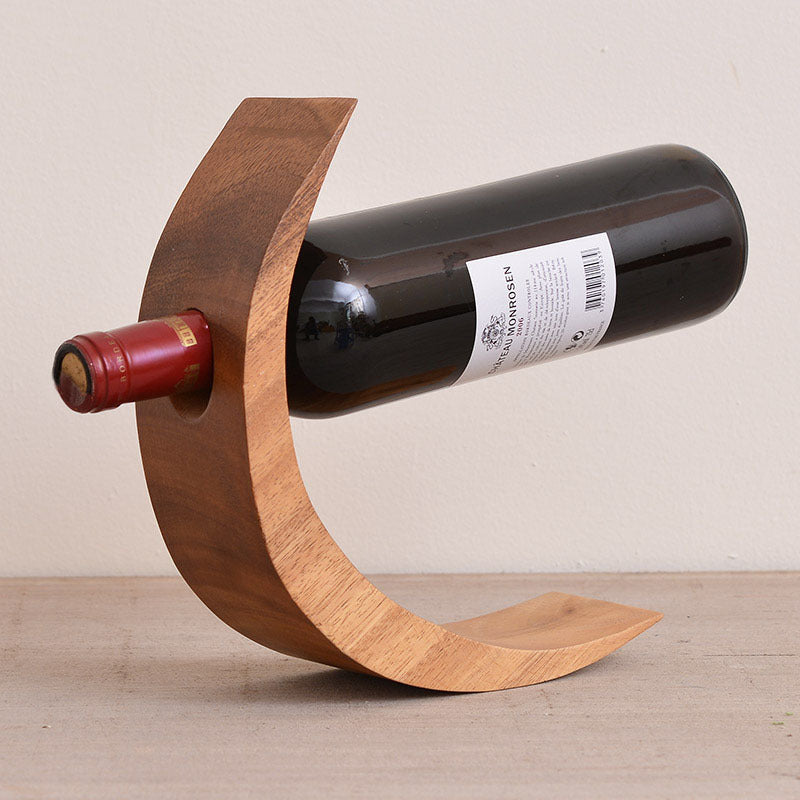
These use precise weight distribution to hold a bottle at a striking horizontal angle, with no visible support underneath. The result looks like the bottle is floating, which makes them genuinely eye-catching on a dining table or kitchen bench.
The Balanced Wooden Wine Bottle Holder is built from solid timber with a clean, contemporary profile. It's the right choice when you want to showcase a single special bottle, whether a birthday wine, a gift, or something you're saving for a particular occasion. It draws attention in a way that a rack simply doesn't.
One honest limitation: the design relies on the weight of a full bottle to balance correctly, so it works best with bottles that are at least half full. It's a display piece for wines you're watching, not ones you're actively working through.
Wave-Style Freestanding Racks
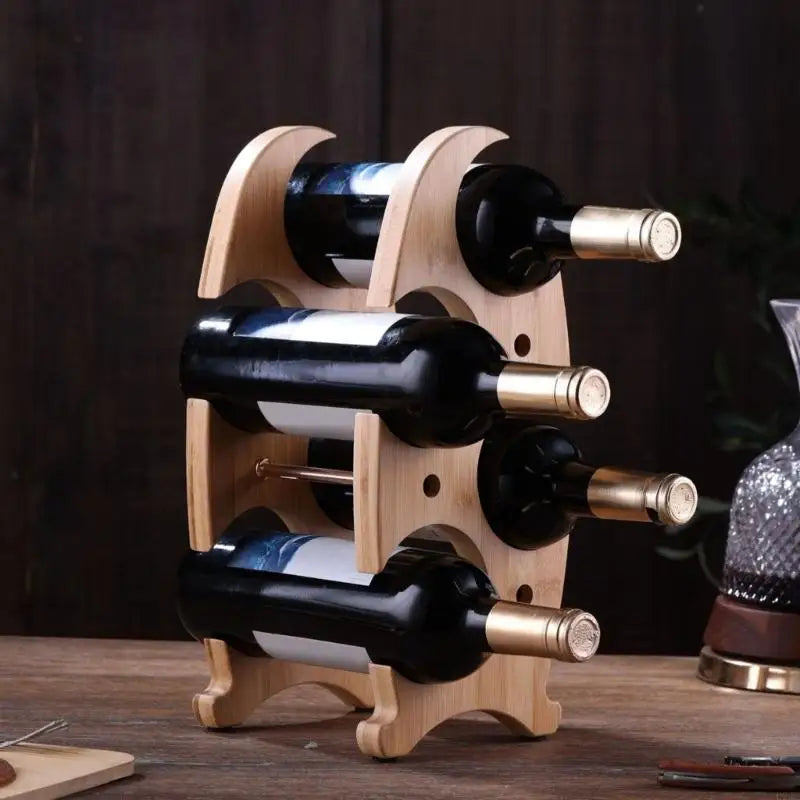
If you want to display more than two or three bottles but aren't ready to commit to wall-mounted storage or a full wine rack set, a wave-style freestanding rack sits cleanly in the middle ground.
The Wave Free Standing Wine Rack comes in brown or bamboo and holds bottles at a gentle curve that keeps corks moist and labels visible. It's compact enough for a kitchen bench but substantial enough to anchor a home bar or sideboard. The bamboo finish handles humidity better than raw timber, worth keeping in mind if you're placing it near a sink or in a warm kitchen.
This is the most practical option if you cycle through bottles regularly and want your current selection within easy reach.
Ornate Multi-Bottle Racks with Glass Storage
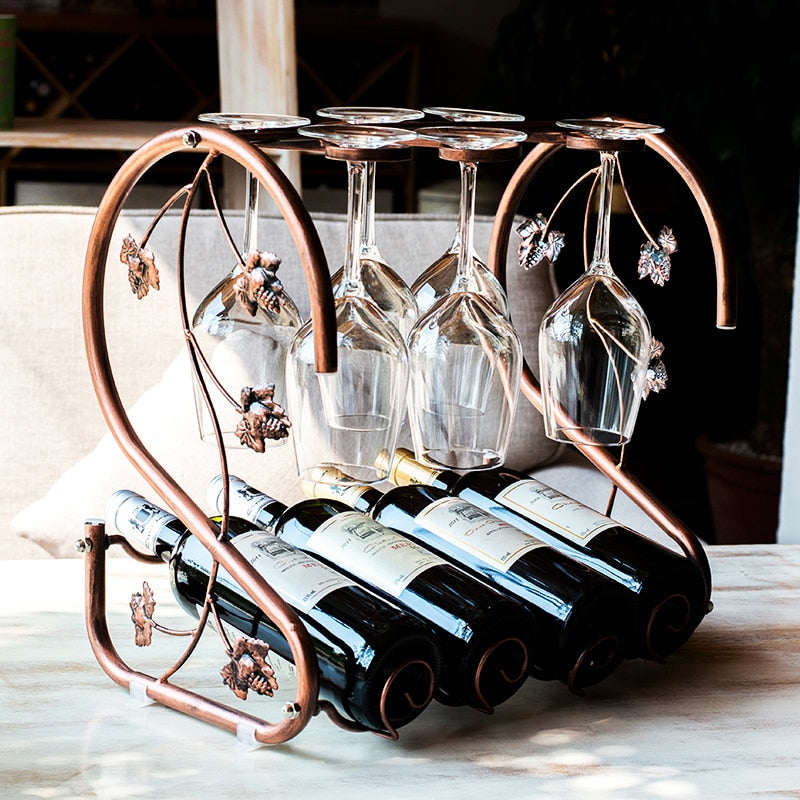
For anyone who entertains regularly, a combined bottle and glass holder solves a small but real problem: finding somewhere to put wine glasses when they're not in use. The Ornate Display Wine Rack holds four bottles and six glasses in one piece, with detailed metalwork that suits a formal or upscale setting.
This works well in dining rooms, dedicated cellars, and home bars where presentation matters. It's probably too ornate for a casual kitchen bench, but in the right context it reads as a feature rather than just storage.
Wood or Metal: How to Actually Decide
The standard advice is to match the stand to your interior style, which is true but not very useful on its own. Here's a more practical way to think about it.
Choose wood if your kitchen or dining room already has timber elements, whether that's floorboards, a butcher's block, timber furniture, or natural stone benchtops. The grain and warmth of wood will connect with those elements rather than compete with them. Pine and bamboo are lighter in colour and suit contemporary or Scandi rooms. Darker finished hardwoods suit traditional or Hamptons interiors.
Choose metal if your space is predominantly white, grey, or black, or if you have stainless steel appliances and clean-lined furniture. Metal stands are also easier to wipe down, which matters on a kitchen bench where condensation and wine drips are a fact of life.
If your space mixes materials (which many Australian homes do), lean toward whichever element dominates. A room with timber floors and white walls will read as a timber room. A room with white cabinetry and a marble benchtop will read as a modern one.
Placement: Where Each Style Works Best
Kitchen benchtop: Keep it compact. A single gravity holder or a small wave rack is enough. The bench needs to stay functional, so anything with a large footprint will quickly become an obstacle rather than a feature.
Dining room sideboard: The best location for an ornate or multi-bottle rack. The surface is designed for display, there's no food prep pressure, and a well-chosen stand holds its own alongside serving pieces and candles.
Home bar: Any style works here, but the wave rack or ornate multi-bottle holder with glass storage tends to be the most practical because you want bottles and glasses in the same spot. If your bar has wall space available, pairing a countertop stand with wall mounted wine racks gives you the most visual impact without sacrificing bench space.
Living room shelving: A gravity holder or ornamental stand works well here, placed alongside books and objects as part of a broader shelf arrangement. Treat it as a decorative object first, not just a wine holder.
Four Questions Worth Answering Before You Buy
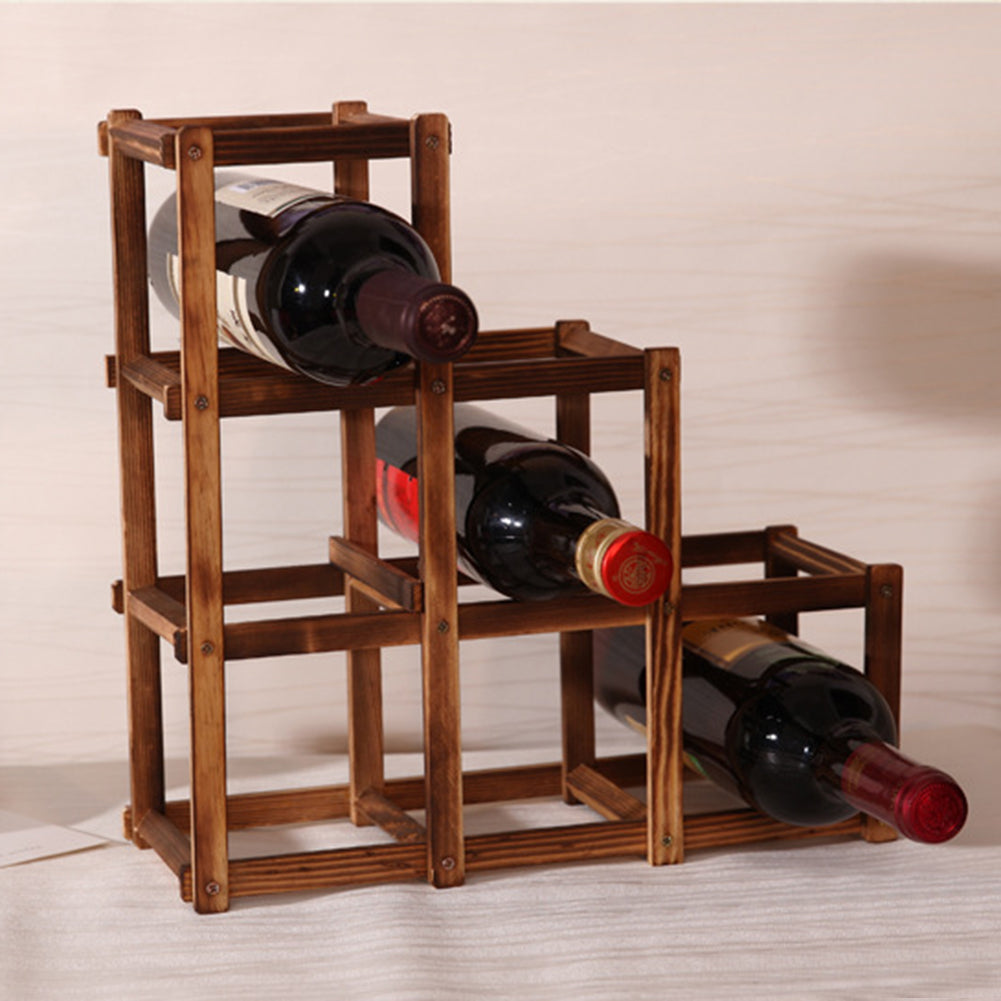
How many bottles are you displaying at once? A gravity or ornamental holder is right for one or two bottles. The Foldable Grid Wooden Wine Holder and wave-style racks suit collections of six to ten bottles that you're actively rotating.
What is the actual surface measurement? Measure before buying. Product dimensions are listed on each product page, and the difference between a compact stand and a full ornate rack is significant on a real bench or sideboard.
Will this sit near a heat source or in direct sunlight? Both shorten the life of wine regardless of how it's stored. If your ideal placement gets afternoon sun, it's worth considering a different spot in the room.
Is this a gift? The handcrafted ornamental holder tends to work well as a gift because it's clearly a considered object rather than a generic kitchen item. It pairs naturally with a bottle and suits most home aesthetics.
Browse the full range in the Display Bottle Holders collection if you want to compare all styles side by side.
Frequently Asked Questions
What is the difference between a display stand and a wine rack?
A wine rack is primarily about storage capacity: it holds as many bottles as possible in an organised way, usually as part of a cellar or kitchen setup. A display stand is designed around a smaller number of bottles and puts the emphasis on how they look. The line blurs with something like the wave rack or the ornate multi-bottle holder, which do both, but the intent is different. A display stand is something you notice. A wine rack is something you use.
Do you need a full bottle for a gravity holder to work?
Yes, broadly speaking. Gravity holders balance the weight of a full bottle against a precisely positioned timber base. A bottle that is less than roughly a third full won't provide enough weight to hold the angle correctly, so they're best suited to sealed or recently opened bottles rather than ones you're working through over several weeks.
Can a display stand handle wine that you're ageing?
For bottles you plan to open within the next six to twelve months, a display stand works perfectly well as long as it keeps the bottle horizontal and away from direct light. Cork moisture is the main concern during that timeframe. For longer-term ageing across several years, consistent temperature and humidity matter more and a dedicated storage solution is the better choice.
Are these suitable for spirits and non-wine bottles?
Most stands are sized for a standard 750ml wine bottle. The wave rack and foldable grid holder are generally flexible enough to accommodate different bottle shapes, but if you have something oversized in mind (a magnum, for instance, or a wide-based spirit bottle) it's worth checking the product dimensions before buying.